

Design Principles for Flourishing Schools
This is the fourth in a six-part series on what education would look like if it were designed for human flourishing.

The first three articles in this series have spent a lot of time in the philosophical weeds: Aristotle, Dewey, eudaimonia, wisdom. As a recap:
The first article made the argument that schools aren’t broken. They are working exactly as designed. So, if we’re unsatisfied with the results of the current model, perhaps it’s time to think about a new design.
The second article asked the question, “what if schools were designed for human flourishing?” then proceeded to give some definition of what flourishing means.
The third article pointed to the difference between wisdom and intelligence, and how environments optimized around individual intelligence fall short of cultivating wisdom.
So that makes up the foundation of the argument, a philosophy of education rooted in human flourishing. But at some point, you have to ask the practical question: what does any of this look like in a building, with real children, on any given school day?
This article looks at the design principles for flourishing schools.
It’s tempting to read a list like this as a set of best practices, the kind of thing that shows up on a conference slide. That’s not the right lens. Rather, these principles follow from a particular claim about what a child is and what a school is for. So let me put that claim on the table first.
Why these principles, and not some other list
Dr. Erin Raab makes an argument that follows in the footsteps of great pedagogues like Maria Montessori: a school is more like a garden than a factory. A factory takes raw material and assembles it into a finished product, the same one every time, with the defects caught and fixed along the way. A garden does something different. The oak is already inside the acorn. The gardener doesn’t manufacture the tree. She builds the conditions (soil, light, water) and then gets out of the way of something that was going to grow anyway.
Children are acorns, not raw material. You can’t engineer a human any more than you can engineer a tomato. You can only cultivate one. And if that’s true, then the most important design question isn’t “what do we put into the child?” It’s “what does this environment make possible, and what does it shut down?”
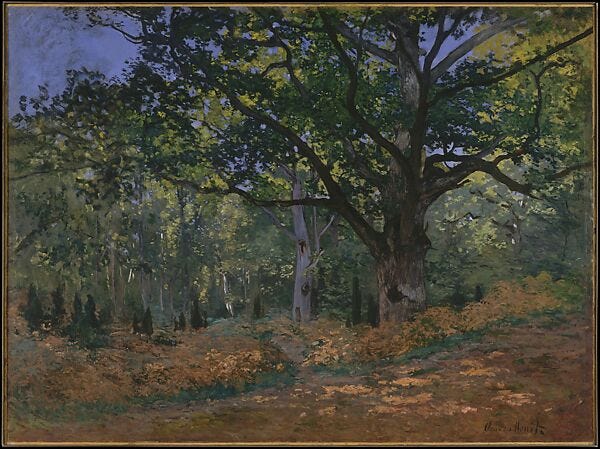
Raab’s answer draws on decades of research into what humans need to grow. We have physical needs, obviously. But self-determination theory and related work describe a handful of core psychological needs: autonomy, competence, connection, and meaning. When an environment meets those needs, people develop. When it starves them, people wither, the way a healthy plant withers in a pot that’s two sizes too small. It stays alive. It just never becomes what it could have been.
In this way, schools don’t only fail to meet those needs—they actively get in the way. Raab pulls together several different lines of research, each pointing to a force that blocks human growth: chronic stress, shame, scarcity, alienation, and identity threat. Each one shuts down a child’s ability to learn and to become themselves.
So the design principles aren’t arbitrary. Imagine each one as an antidote. Once we name the obstacle, the principle that counters it comes into focus. That’s the logic I want to walk through. Raab identified five principles. I’ll take those five, then argue for a few more that operate at a different level.
Think of all of them as design requirements: the things that have to be present for a learning environment to move toward flourishing rather than away from it.
Safety
Raab’s first principle is safety, and she means it more broadly than the obvious. Physical safety matters, of course. But a school also has to feel safe. A child living under chronic stress or identity threat, a child who feels watched, judged, or unsafe to be wrong, cannot flourish. The fear response and the thinking brain don’t run at the same time.
There’s a tension here that schools have to navigate carefully. On one side, a learning environment needs agreed-upon rules and norms. Without them, children don’t develop the capacity to navigate their world, internalize social expectations, or build genuine relationships. Raab calls the absence of clear norms anomie, and it’s just as destabilizing as fear. Structure is not the enemy of flourishing.
On the other side, rules that exist purely for compliance, rules that require children to submit rather than participate, produce either obedience or rebellion. Neither of those is flourishing. The goal is an environment where children feel safe and where they understand themselves as agents in shaping their community rather than subjects of it.
What this looks like in practice varies. But one marker is whether children have any real say in the rules they live under. Schools where learners help create and enforce community norms produce something qualitatively different from schools where rules arrive from above and violations get managed from the principal’s office.
Slack
This one surprises people.
Education reform almost always means adding. More standards, more assessments, more professional development, more technology, more accountability. The instinct is understandable: if outcomes are poor, do more.
Raab’s second principle pushes back on this directly. It’s the antidote to scarcity, which is one of the most corrosive forces in a school. When time feels scarce, our minds tunnel. We become forgetful, short-tempered, and unable to plan or connect. Scarcity taxes the bandwidth we would otherwise use to think.
Slack is the cure. It’s open space in schedules and routines for reflection, inquiry, experimentation, and the kind of slow, unstructured thinking that learning requires.
For educators
Designing for slack at a school level means adults have sufficient time to plan, to reflect individually and together, to try new things, evaluate effects, and to deal with unanticipated crises. This means having sufficient time to absorb unexpected demands, detours, or delays without causing panic, and still being able to meet deadlines. Slack has to be built into the schedule at the school and the classroom level.
For learners
Schools keep students busy because there’s a deep institutional distrust of what children will do with unstructured time. They’ll waste it. They’ll get into trouble. They “won’t be learning.” But packing every minute with directed activity produces exhaustion and compliance, not deeper learning. The kind of meaning-making that sticks (the kind that develops understanding rather than short-term retention) requires time to wander, to connect things, to sit with confusion before demanding a resolution. Creating slack is more than study hall or empty time dropped into a schedule. It’s intentionally designed breathing room, woven into the rhythms of the school day, that signals to learners: you are a thinking human being, and thinking takes time.
Connectedness
Schools already produce social relationships, so this one can seem obvious. But Raab’s third principle is more specific than “kids make friends.” It’s the antidote to shame, the feeling that you are flawed and therefore unworthy of belonging. Shame works directly on our deepest need, the need for connection, and environments that tie acceptance to performance or use humiliation to motivate manufacture it in bulk.
Connectedness as a design principle means intentionally creating an environment where learners encounter each other as whole human beings, and where the curriculum regularly requires genuine collaboration, productive disagreement, and care for other people’s experience.
Schools that take connectedness seriously design learning experiences where students can’t succeed without engaging with each other, where the goal is practicing the skills of community (listening, advocating, compromising, repairing) and not just completing a project.
Autonomy Support
The fourth principle gets the most attention in self-directed learning circles. It’s the antidote to alienation, the state Raab describes when a child adopts the “shoulds” and “musts” of their environment without ever integrating them, and ends up performing a self that isn’t really theirs.
Autonomy support means deliberately creating conditions where learners develop genuine agency, where choice and responsibility are real rather than simulated. That’s a far cry from turning children loose with no guidance. Raab frames it as deep perspective-taking: actually considering why a child wants what they want, and designing from there.
There’s a wide spectrum here. Some schools give learners near-total freedom over what they study, how they study it, and what mastery looks like. Others build autonomy through smaller, more structured choices: learners help design their learning goals, choose how to demonstrate their understanding, or shape how their time is organized.
What matters, for flourishing, is that autonomy never exists in isolation. A child’s freedom can’t come at the expense of the community’s safety or connectedness. When those principles are in tension, the school has to navigate it thoughtfully. Autonomy that routinely tramples the experience of others is just a different kind of control.
Democratic Voice
Raab’s fifth principle most directly addresses the civic function of education. It’s the one principle that isn’t only an antidote to a personal obstacle. It’s also an aim in itself, because school is the place a society practices being a society.
School is where children learn how the world works. The habits they develop there (about who has power, how decisions get made, whose voice counts) will shape how they engage as citizens. A school that operates autocratically, no matter how enlightened its curriculum, is teaching children that democracy is something that happens elsewhere, to other people.
Democratic voice as a design principle means learners have real, meaningful participation in how the school is run: the rules, the governance, the culture. It means the gap between what school says about democracy and what school does in practice stays as small as possible.
This is hard. Authentic student governance is messy, slow, and sometimes frustrating. Decisions that a principal could make in 5 minutes might take a community meeting and three rounds of discussion. But that messiness is the point. It’s practice for the real thing.
Practicing democracy at a micro level is another way for learners to engage with the humanity of their peers. Most schools set graduation requirements around academic content. Few require students to demonstrate that they’ve developed the ability to positively impact others. Summerhill, the legendary democratic school in England, asked potential graduates to stand before the entire school community and make the case that they were ready to go out into the world as contributing members of society. That’s a fundamentally different way of thinking about what a diploma represents.
Beyond the Environment
Raab’s five principles describe an environment. They’re about the conditions a school sets: the rules, the schedule, the relationships, the distribution of power. That’s the right place to start, because the environment is what either meets or starves a child’s core needs.
But a flourishing education needs more than a healthy environment. It needs the right experiences happening inside that environment. In a previous article, we explored Aristotle’s concept of eudaimonia and how it had three prerequisites: freedom to make wise choices, internal virtues, and access to external goods. In that vein, I want to add three more requirements. These don’t all sit at the same level as Raab’s five. Two of them are really about what we design for and toward, not just the soil we plant in.
The first is character. Raab would point out, rightly, that character isn’t an environmental condition the way safety or slack is. It’s closer to an outcome, one of the things a child becomes through years of practice. And that’s exactly why it belongs here. A child spends something like 14,000 hours in school. As Raab puts it, identity is “repeated beingness,” and we become whatever we repeatedly practice being. So character gets shaped no matter what (the word character comes from Greek, meaning “to etch”). The only question is whether it’s shaped by design or by default. So, the question for school designers: what kind of human beings is this place producing? If the answer is “we don’t really think about that,” then character is being shaped by accident.
The second is relevance. This one is really about meaning, which Raab names as a core human need, and about the difference between education designed for learning and education designed for sorting. An education entirely focused on the future (college, career, eventual adult life) misses the child who is here right now, curious about something in the present. Flourishing can’t be deferred, because the future self is built out of today’s habits and experiences. You don’t store up flourishing for later. You practice it now or you don’t. Learners have to encounter real problems, real questions, real stakes in the present. An education that never meets a child where he is can’t meaningfully be called his.
The third is opportunity. Which begs the question, opportunity to do what? I’d put it in two parts. First, equity means every child actually has their core needs met, not just nominal access to the same building or the same menu. A vision of flourishing that only works for some children is a vision of privilege. Second, and this is the part that’s easy to miss, opportunity includes the capacity to change the menu. The options available to any of us differ enormously by where we’re born, our race, and our family’s resources. A child who can only choose among options handed to them isn’t fully free. Real opportunity means developing the agency to work with others and reshape an unjust distribution of options. Self-directed learning environments can reproduce the same inequalities as traditional schools if they’re not deliberately designed otherwise, so equal opportunity requires active, intentional design: building in structures that ensure all voices have real power.
None of these principles require abandoning standards or rigor. They require rethinking what rigor is for. A school can be demanding and humane. It can hold high expectations and care about the whole child. Those values complement each other, and the most remarkable learning environments I’ve encountered hold both at once.
Next: Why existing definitions of self-directed learning fall short, and the case for something better.
Caleb, I think you'd love the educational philosophy embodied in my book. I certainly love what you say here.
I describe what I do as nurturing environments where children develop a relational kinship worldview and deepen their relationships with themselves, each other, and the rest of the natural world as they learn ancestral skills and modern ecology while exploring and playing in ecosystems. I talk a lot about factory schools, and supporting young people's agency and shared decision-making.
https://www.penguinrandomhouse.com/books/827846/explorations-in-ecology-by-peter-kindfield-phd/